Lead Nurturing Strategies: Examples & Automation Ideas
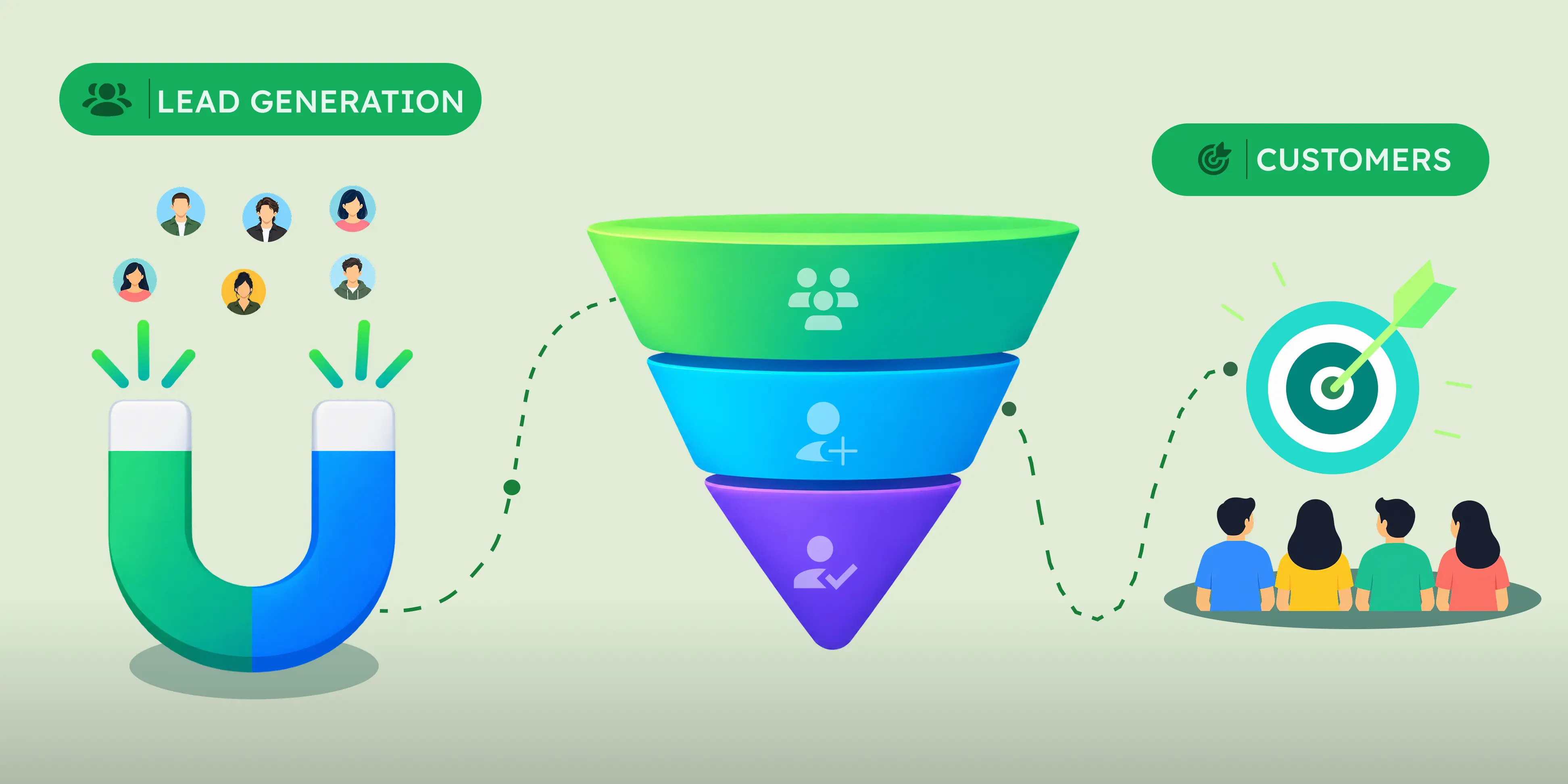
Most leads don't buy the moment they arrive. There is a gap between a form fill and a purchase decision.
What happens in that gap decides whether the lead converts or walks away. If left alone, the lead may go quiet or pick a competitor. That's why lead nurturing strategies exist - to manage the gap on purpose, instead of hoping the lead remembers you later.
In this guide, we explain why lead nurturing matters. We show how lead generation works and how lead management fits into the sales process. We share five automation tactics that move prospects through the sales funnel. We also explain how to confirm engagement is rising, not just dashboard activity.
Key Takeaways
-
Most leads that never get nurtured never convert. The deal isn't usually lost in the pitch; it's lost in the silence after the first contact.
-
Marketing automation is what makes nurturing consistent across thousands of leads at once. It runs on behaviour and timing, not on a rep remembering to follow up.
-
The best nurturing programs map content to each stage, assign clear lead ownership, and track real engagement, not just opens and clicks.
See how you can manage leads, automate follow-ups, and keep prospects moving through the sales funnel in Twozo CRM.
Why Leads Go Cold Without a Lead Nurturing Strategy
Before automation entered the picture, follow-up depended almost entirely on a rep remembering to reach back out. A form fill, a webinar signup, a resource download- none of that meant much beyond "this person is curious right now". If nobody acted on it quickly, the prospect drifted.
And this wasn't a rounding error. Around 80% of new leads never become paying customers, largely because nobody followed up in time (Marketing LTB, Lead Generation Statistics 2026).
Picture a potential customer who downloads a pricing guide and gets logged in a CRM, with no next step assigned to anyone. The interest that brought them there fades while they quietly start comparing you to competitors.
Under the traditional method, lead generation techniques and lead nurturing strategies were treated as two separate jobs run by two separate people, with almost nothing connecting them. That gap doesn't hold up anymore.
This is the problem automation was designed to solve. Rather than depending on a rep's memory or a spreadsheet that goes unchecked, automated systems track lead behaviour in real time and trigger timely follow-up, keeping interest alive instead of letting it fade into a competitor's inbox.
How Marketing Automation Changed Lead Nurturing
Customer journeys have changed. Buyers now do their own research, such as comparing vendors and reviews, long before they are ready to talk to sales, and they expect content that matches their stage, not a generic template.
Qualification has become the bridge between lead generation and nurturing. It helps identify which leads are a good customer fit and worth investing time in. In fact, 49% of B2B marketers use intent data to identify which leads and accounts are worth nurturing in the first place (Madison Logic, cited in Lead Generation Statistics for 2026).
Once the right leads are identified, the next challenge is nurturing them consistently at scale. Marketing automation helps by using lead behaviour and engagement to trigger timely follow-ups, so every qualified lead can receive the right attention without relying on manual follow-up.
That's where marketing automation fits in: qualification helps you identify who to nurture, while automation helps you nurture them consistently.
Five Lead Nurturing Tactics That Move Leads Through the Sales Funnel
Automation isn't limited to email sequences. It can also support lead scoring, multi-channel nurturing, and follow-up cadence, helping teams manage different parts of the nurturing process more consistently.
| What Breaks Without Automation | Tactic That Fixes It | What the Data Shows |
|---|---|---|
| Follow-up depends on a rep's memory | Trigger-based email sequences | Automated emails drive 37% of email-generated sales from just 2% of send volume. |
| Reps guess who's worth calling | Lead scoring and prioritization | AI-based scoring lifts conversion 25–30% over manual prioritization (source). |
| Email-only outreach underperforms | Multi-channel nurture orchestration | Engagement runs ~3.5x higher across coordinated channels. |
| More emails sent, fewer opened | Cadence control over volume | Returns drop off sharply past 6–10 touches over 2–4 weeks. |
| Same message sent to every stage | Stage-mapped content | Buyers increasingly disengage from content that ignores funnel position. |
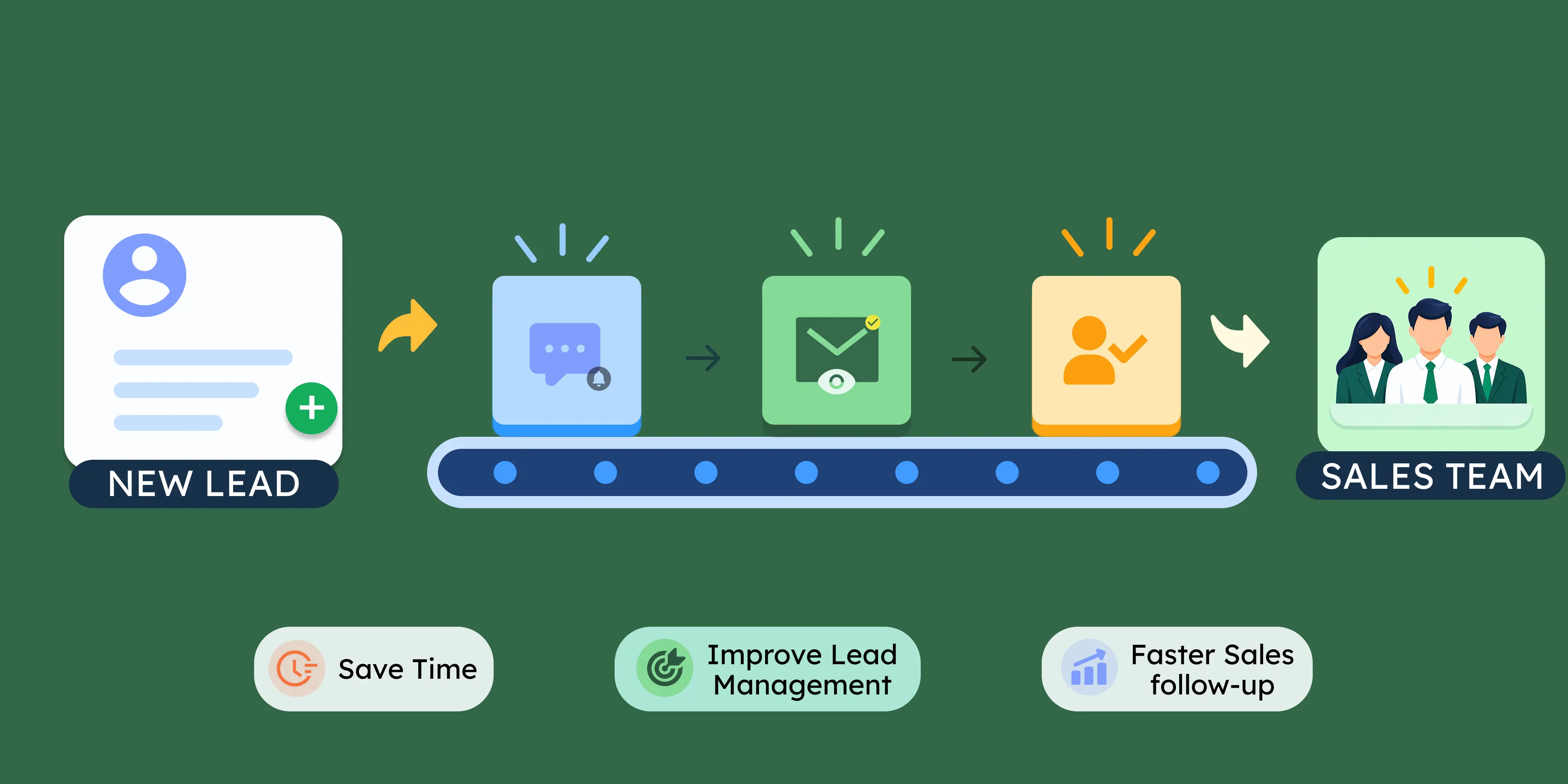
The table above gives you a quick look at the key lead nurturing tactics. Let's break down how each one works and why it matters:
1. Trigger-Based Email Sequences
Instead of firing on a fixed calendar date, automated sequences respond to lead activity, such as a webinar signup, form submission, or a stretch of silence, keeping the message timely rather than arbitrary. For example, when a lead submits a form or engages with a campaign, the system can trigger the next step automatically, while sales reps can be alerted to follow up when further attention is needed.
2. Lead Scoring and Prioritization
Automatically scoring leads by fit and engagement helps the reps focus on the leads that are more likely to convert. That's not a minor efficiency gain, as AI-based scoring has been shown to lift conversion by 25–30% compared with manual prioritization.
3. Multi-Channel Nurture Orchestration
What happens when one lead moves across five different channels? Instead of treating every interaction separately, connect email, WhatsApp, Facebook, and Instagram into one nurture journey. Marketing benchmarks show that this multi-channel approach can generate roughly 3.5× higher engagement than single-channel efforts.
4. Cadence Control (Quality Over Volume)
Sending more messages doesn't always mean better results; in fact, they're often worse. Research on nurture cadence points to a ceiling of roughly 6–10 touches over two to four weeks for B2B - past that, returns fall off, and the messages start reading as noise rather than nurturing.
5. Stage-Mapped Content by Funnel Position
A lead at the top of the funnel wants basic information about the product and how it can solve their problem, while a lead near the bottom wants proof, product details, and a clear answer on pricing. Sending them both the same email is a common nurturing mistake, since buyers expect content that reflects where they are in their journey, not where a template assumes they should be.
Lead Nurturing Ideas: Lead Management and Customer Engagement
Two levers are available here: tightening the process behind your nurturing and improving the content running through it. Neither one does much on its own.
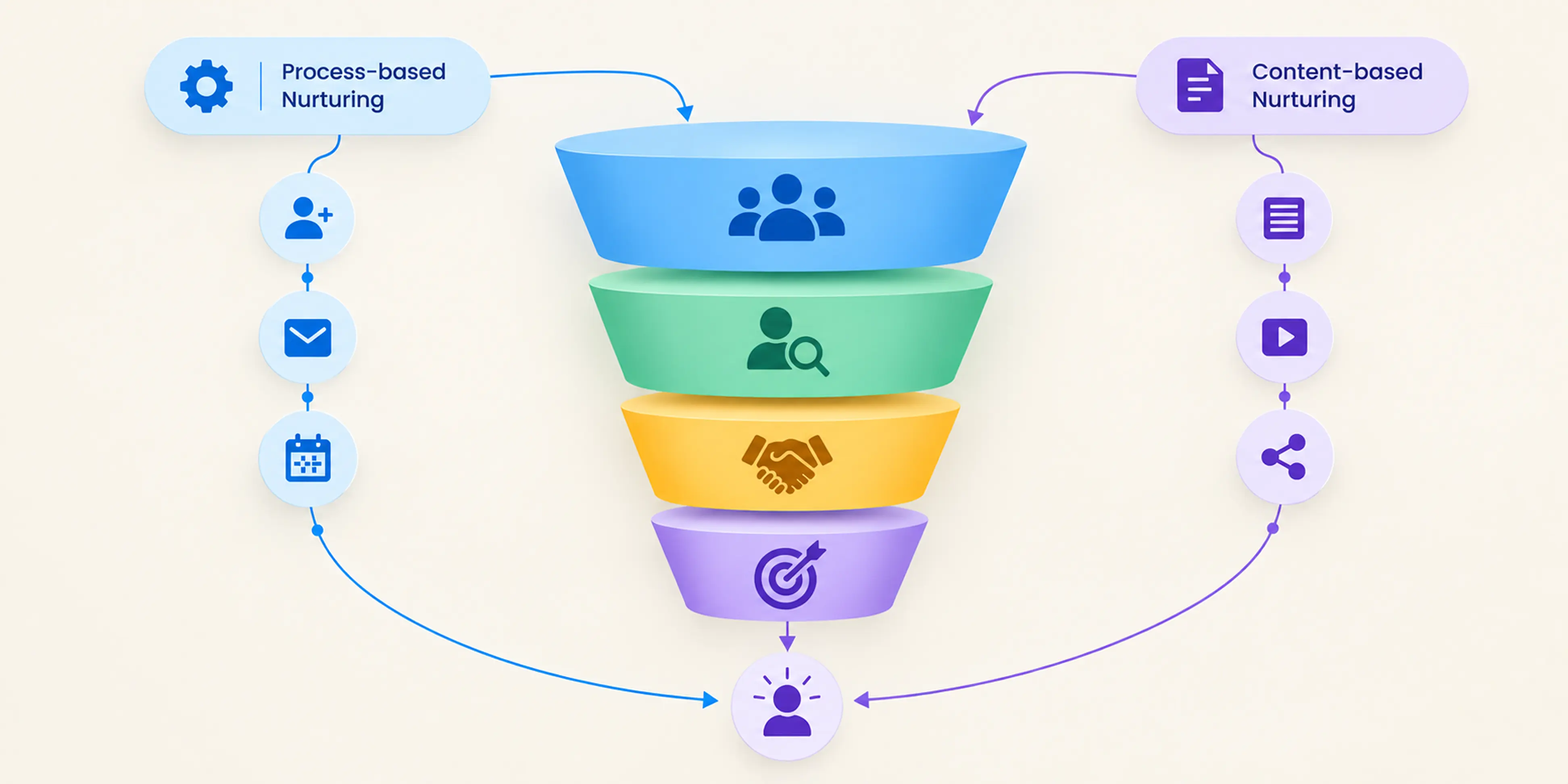
Process-based nurturing
Process is what keeps leads from quietly falling through the cracks:
- Centralize lead data. One profile per lead, one timeline of activity. Scattered spreadsheets and siloed inboxes make it nearly impossible to know who has been contacted or where they sit in the sales funnel.
- Assign clear ownership. Sales teams ignore 48% of the leads they receive from marketing (Marketing LTB Lead Generation Statistics 2026). Auto-assigning leads and flagging leads that have not received a follow-up helps close that gap before it costs revenue. Explore the contact management features to see how automatic assignment and follow-up reminders work.
- Hand off sales-ready leads fast. Speed matters most at the marketing-to-sales handoff, since buyers tend to go with whoever responds first.
Content-based nurturing
Content is what makes each touchpoint feel relevant instead of generic:
-
Personalize beyond the first name. Personalization can lift user engagement by around 20% in B2B marketing (BusinessDasher, 92 B2B Personalization Statistics & Emerging Trends in 2026). Most businesses believe they're already doing this well, but fewer of their customers agree, which is worth checking from the buyer's side rather than the sender's.
-
Trigger re-engagement off inactivity, not a date. Every sales funnel has a point where interest quietly cools. Organizations without a clear lead nurturing strategy lose an estimated $287,000 in potential annual revenue per 1,000 leads generated.
-
Keep nurturing after the sale closes. Customer nurturing simply extends the same relationship-building approach into retention and upsell, rather than stopping the moment a deal is won.
Lead Management in Action
Effective lead management keeps teams organized and ensures timely follow-ups. But what does that look like in practice? Here's what changed for a Twozo customer:
We asked Manimalar, Admission Co-ordinator at San Academy, how lead management helped her team handle student inquiries.
Her answer: "The automated reminders and workflows help our counsellors respond faster and stay consistent in their communication."
That's the practical version of what any nurturing strategy is trying to do: replace memory with a system that doesn't forget. If your team is struggling with leads slipping through the cracks as it grows, read The Lost Lead Problem in Growing Teams for practical ways to keep leads organized and prevent missed follow-ups.
How to Apply Lead Nurturing Strategies to Your Business
We have no single nurturing formula that fits every business. The right mix comes down to how long your sales cycle runs and how many people touch a deal before it closes.
If your buying process involves multiple stakeholders and a longer research phase, common across B2B and SaaS customer journeys - lean harder on stage-mapped content and multi-channel orchestration, since a single email sequence will not reach everyone involved in that kind of decision.
If your sales cycle is shorter and more transactional, cadence control and fast lead scoring matter more than elaborate multi-touch sequences, since speed to that first response often decides the outcome.
Whichever mix you choose, measure it against real buying signals rather than vanity metrics that only look good in a report. If you're ready to bring these processes together in one CRM, explore CRM pricing to find a plan that fits your team's needs.
Measuring Customer Engagement Throughout the Nurturing Process
Email opens and link clicks provide basic engagement data, but they don't fully indicate buying intent. Metrics such as open and link clicks, reply rate, and personalized CTA click rate provide stronger signals of how actively a lead is engaging and progressing toward a purchase.
| Engagement Signal | What It Tells You | Why It Matters |
|---|---|---|
| Email Opens & Link Clicks | How many people opened your email and how many clicked a link in it | Shows whether the message matched what they expected |
| Content revisits | Rising buying intent | A returning visitor is a warmer lead than a new one |
| Reply rate | Active interest, sales-ready signal | Direct engagement beats passive opens every time |
| Personalized CTA click rate | Personalized CTAs convert ~202% better than generic CTAs | Proof that relevance, not volume, drives action |
Final Thoughts
Growth doesn't come from a fatter top of funnel - it comes from what a business does with the leads it already has. Combining a rep's judgment with a system that never misses a follow-up helps businesses keep leads engaged and turn more of them into customers. Explore the Twozo blogs for more practical CRM and sales insights.
Ready to put these lead nurturing strategies to work? See lead nurturing in action - book a demo.
FAQs
Q: What's the difference between lead generation and lead nurturing strategies?
A: Lead generation focuses on capturing new prospects; lead nurturing strategies focus on guiding those prospects toward a purchase decision once they're already in the funnel.
Q: How long should an automated lead nurturing sequence run?
A: It doesn't stop on its own; it runs until it's turned off or the lead exits, whether that is converting, unsubscribing, or being removed manually. Set clear exit conditions rather than a fixed end date.
Q: Can lead nurturing campaigns work without marketing automation?
A: Yes, but they're a lot harder to run at scale. Automation handles timing and consistency; it was never the strategy itself.
Q: Does customer nurturing continue after a lead becomes a customer?
A: Yes. Customer nurturing simply extends the same relationship-building approach into retention and upsell, rather than stopping at the first sale.