Ultimate Guide to Customer Retention & Brand Loyalty

It takes a significant amount of effort, time, and capital to attract a new buyer. However, we need even more strategic effort to secure that buyer's lasting loyalty. All modern businesses want scalable growth, yet too many still focus all their resources on attracting new customers.
They overlook those who have already purchased from the company before. This leaves substantial revenue on the table and stunts long-term business growth. Earlier, businesses could survive by simply out-marketing their churn rates with aggressive advertising and large sales teams.
Today, however, this unbalanced approach results in a costly routine. New buyers come in the front door while old customers rapidly exit through the rear. The discipline of keeping a client is a precise science that deals with continuous, meaningful engagement.
Businesses that master customer retention do not look at a purchase as the endpoint. Instead, they see the initial purchase as the starting point of a profitable relationship. If the buyer feels respected and gets consistently high-level customer support, they remain loyal to your brand.
Key Takeaways
-
Customer retention is not a reactive metric; it is a proactive daily process starting from the initial purchase.
-
Delivering exceptional, personalized customer support drastically increases long-term loyalty and limits expensive churn.
-
Mapping out the entire customer journey helps your team anticipate client needs and ensures sustained customer success.
-
Utilizing robust, modern CRM platforms centralizes vital data and fully automates your relationship management workflows.
What Customer Retention Truly Means in the Customer Journey
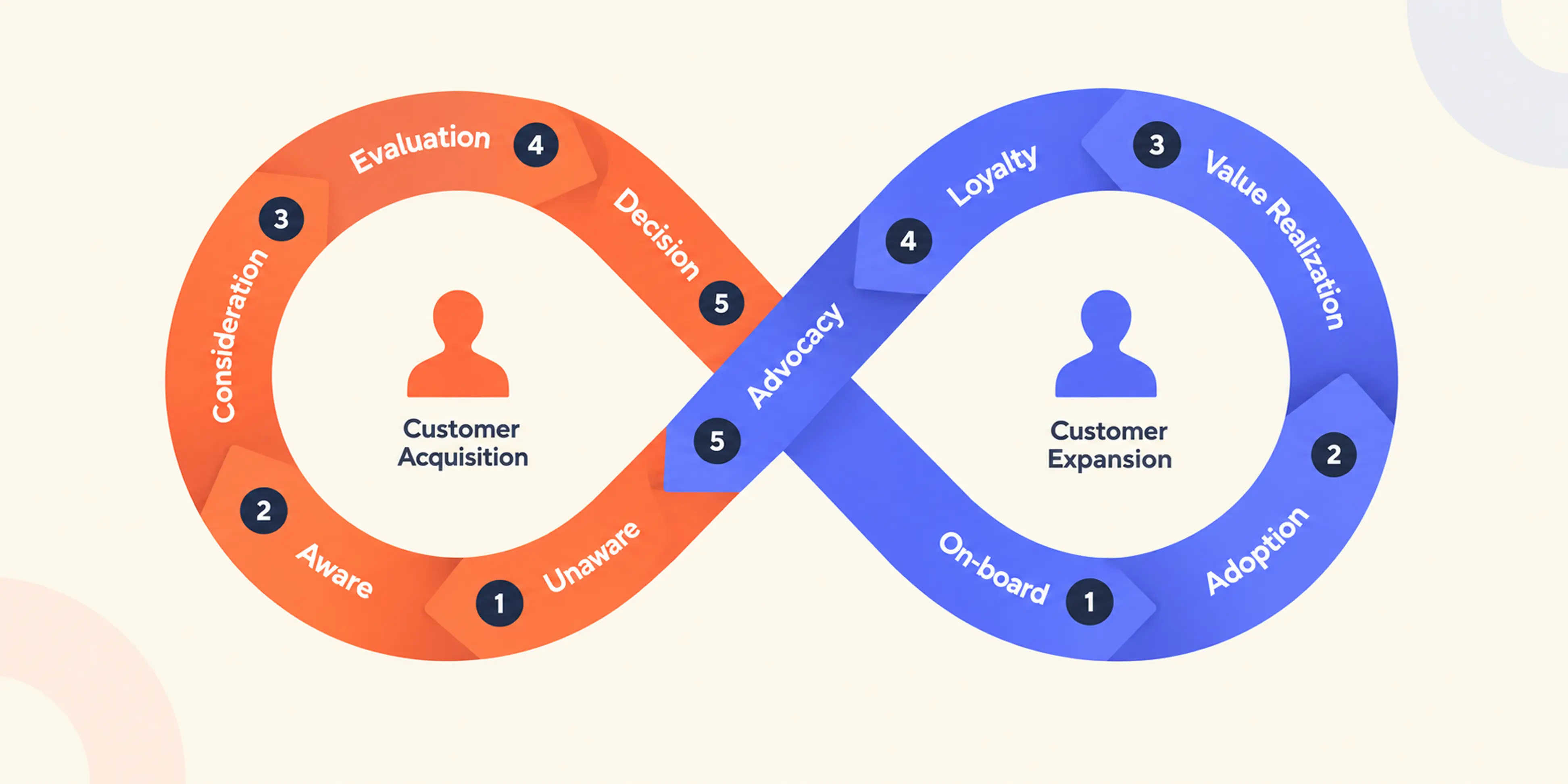
Customer retention is not driven by price alone. It depends on building trust, providing a convenient customer experience, and consistently delivering value over time.
At the first point of contact with your company, buyers are taking a chance on your promises. They place their trust in you, your services, and your specific products to resolve their painful issue and meet a particular need.
Once they get a smooth, easy transaction experience that helps them and respects their time, they gain real confidence in your company. Eventually, this initial confidence develops into a strong emotional connection that keeps them deeply loyal.
The retention lifecycle occurs naturally as buyers move through a series of carefully planned stages in their customer journey.
Transitioning from Initial Purchase to Customer Success
The first stage of this customer lifecycle entails maximizing customer satisfaction during initial onboarding interactions. When customers are satisfied with product quality, their perception of overall brand value grows exponentially.
If they simultaneously receive adequate customer support from your team, this perception of value becomes deeply solidified. This perception fosters an emotional connection that eventually results in predictable, repeat transactions over the years.
It drives long-term customer success by ensuring clients reach their business or personal goals with your product. Retaining buyers is not merely a one-time achievement to celebrate — it is an ongoing, daily operational process that keeps them engaged year after year.
The Practical Benefits of Keeping Existing Buyers for Customer Success
There are numerous operational benefits in working with your current customers. These benefits have a direct, positive impact on departments across your growing organization.
Dealing with current customers does not require nearly as much time and effort for educational processes. The current buyer already knows your products, understands how they work, and knows how to communicate with your staff.
Your dedicated teams have already addressed the initial onboarding challenge. You can now concentrate on providing more value for customer success without spending effort on basic issues.
Moreover, your long-term customers give you valuable feedback for improving your daily business operations.
Why Customer Satisfaction Lowers Operating Costs
Because these loyal clients use your services regularly, their feedback comes from real, everyday experiences. Their experience helps them identify what works well and where products, support, or services can be improved.
Listening closely to them helps executive management teams determine the exact right way to refine internal processes. Furthermore, retaining clients is significantly cheaper than constantly hunting for new ones in a crowded market.
According to Harvard Business Review, gaining a new customer can cost 5 to 25 times more than keeping one. Keeping customer satisfaction high means your marketing budget can stretch further, driving higher overall profitability.
Aligning team goals with performance drives higher retention.
How Proactive Customer Support Drives Revenue
A proactive customer stays engaged and actively supports your business, while a reactive customer responds only when needed. Proactive customers are preferred because they share positive experiences and build trust. Their recommendations create warm leads, encourage new business opportunities, and help turn them into loyal advocates who support your long-term growth.
Loyal customers also actively help with your organic growth because they eagerly share positive experiences about you. Word-of-mouth marketing is still one of the best ways to promote a business today.
Peers and business partners implicitly trust a direct recommendation from a satisfied client. When your customer support team exceeds expectations, these clients become vocal brand ambassadors for your company.
They effectively become an extension of your sales team, driving qualified leads directly to your pipeline.
"Customer service shouldn't just be a department, it should be the entire company." – Tony Hsieh, Former CEO of Zappos.
Core Pillars of an Effective Customer Retention Strategy

Developing a strategy directly aimed at retaining clients should be an intentional, well-planned process. One isolated customer support agent or a single salesperson cannot handle it alone.
The organization must build a core culture and display it through daily actions, policies, and leadership directives. To achieve this, companies must build their operations around proven retention pillars.
If you want to understand the science behind these strategies, review modern industry insights on customer retention. It highlights proactive engagement in client relationships.
Onboarding Clients Properly for Customer Success
The early period immediately following the first purchase creates the foundational bedrock for the entire customer journey. Giving proper, clear instructions, offering lightning-quick assistance, and sending personalized welcome messages set the perfect tone.
These important first steps help customers see results quickly and remove any doubts about their purchase decision. A robust onboarding sequence proves to the buyer that they made the right choice in trusting your brand.
It effectively bridges the gap between the promises made by your sales team and the actual delivery of value. Without proper onboarding, even the best products in the world will suffer from alarmingly high churn rates.
Delivering Proactive Customer Support
The time when a client files a formal complaint shows that the problem happened earlier. Reactive support forces the client to endure frustration before they finally decide to reach out for your help.
Proactive customer support involves reaching out to the client before they notice a problem. It requires active monitoring of system or service health and fixing minor problems behind the scenes.
When you solve a problem before the client feels the pain, customer satisfaction skyrockets instantly. It shows care and technical skill that modern consumers respect and will pay for.
Constant Communication Throughout the Customer Journey
Keeping in regular, meaningful touch with your clients ensures that you will remain highly visible and relevant to them. However, this communication must be genuinely useful for them and not just a barrage of promotional sales pitches.
Sending valuable, highly curated information like industry guides, best practices, or product news keeps them engaged. This strategy will make buyers happier, educate them on advanced features, and constantly elevate overall customer satisfaction.
When a brand stays silent, customers often wonder whether your organization still values their business. Regular, value-driven check-ins prove that you care about their ongoing success, not just their initial wallet share.
Personalization of the Experience to Boost Customer Satisfaction
Every single client in the world would love to get the distinct feeling of being a highly unique individual. No one wants anyone to treat them like just another random ticket number in a massive, faceless corporate queue.
Recalling the exact history of your communication and deeply knowing the particular preferences of their business matters immensely. Adapting your communication tone and style to their previous experiences shows genuine respect and empathy.
Personalization is the ultimate key to unlocking deep emotional loyalty in an otherwise highly transactional digital marketplace.
Measuring Success: Key Metrics for Customer Support
You simply cannot improve what you do not accurately measure within your daily business operations. To truly optimize your customer retention efforts, you must rigorously track specific key performance indicators.
These metrics act as the vital pulse of your organization, telling you exactly how healthy your client relationships are. Relying only on gut feelings or anecdotes is a sure way to lose market share to data-driven rivals.
Customer Churn Rate and Customer Satisfaction
Your churn rate represents the exact percentage of customers who completely stop using your product over a given timeframe. It is the most direct, undeniable indicator of whether your customer retention strategies are actually working or failing.
A high churn rate clearly signals deep-rooted issues in your product quality, pricing, or overall customer satisfaction. By actively tracking why users leave, you can patch the holes in your proverbial bucket before more revenue drains out.
Lowering this specific metric by even a few percentage points can yield massive, compounding gains in annual revenue.
Customer Churn Rate Formula:
Customer Churn Rate = (Customers Lost During the Period ÷ Customers at the Start of the Period) × 100
Net Promoter Score (NPS) and the Customer Journey
The Net Promoter Score (NPS) measures exactly how likely your current clients are to recommend your business to others. You calculate it by asking one simple, highly effective question on a scale of zero to ten.
Tracking NPS at various critical touchpoints along the customer journey helps you pinpoint exactly where friction occurs. Promoters (those who score 9 or 10) are your absolute best indicator of true customer success and brand loyalty.
Detractors (those who score 0 to 6) require immediate, proactive customer support intervention before they churn entirely.
| Metric Name | Primary Calculation | Strategic Purpose in Retention | Key Operational Focus Area |
|---|---|---|---|
| Churn Rate | (Lost Clients / Total Clients) x 100 | Measures percentage of lost accounts over time | Product Quality & Onboarding |
| Net Promoter Score (NPS) | % Promoters minus % Detractors | Gauge long-term brand advocacy & word-of-mouth | Overall Customer Journey Health |
| Customer Satisfaction (CSAT) | (Positive Ratings / Total Responses) x 100 | Evaluate immediate interaction satisfaction | Quality of Customer Support |
| Customer Lifetime Value (CLV) | Average Purchase Value x Frequency x Retention | Quantify total financial value of retained client | Long-term Customer Success |
CRM Metrics That Drive Customer Retention
Handling complex customer relations through manual, outdated means is simply not possible when your business grows bigger. Companies often store information about vital customers across disparate, messy sources such as spreadsheets and personal email accounts.
Some staff still rely on handwritten sticky notes, so they naturally miss key information. The modern, industry-tailored CRM solution seamlessly becomes the ultimate single source of truth.
It securely keeps all records and intelligently handles each interaction to prevent anything from falling through the cracks.
Centralized Record of Interaction Across the Customer Journey
The CRM system diligently maintains one unified, highly comprehensive record for each and every customer you serve. We keep every email correspondence, customer support request, telephone conversation, and purchasing record safely in one place.
Whenever the client contacts you, anyone on your entire team can instantly get a full, clear picture. This completely prevents the highly frustrating scenario of making the customer retell their long story to multiple different agents.
Centralized data ensures that your team always looks incredibly professional, highly organized, and deeply attentive to client needs.
Detection of Warning Signals to Safeguard Customer Success
Customer behaviour changes before opportunities are lost. Lower activity, reduced engagement, and communication gaps often signal potential risks. Built into Twozo, Nira AI identifies these patterns early, helping your team act before small issues become bigger problems.
Using AI-powered analysis, Nira AI provides deal predictions, risk alerts, engagement insights, and recommended next steps. It helps teams understand what is driving results, where attention is needed, and how to keep deals moving forward.
With clear contribution breakdowns and additional insights, Nira AI turns data into action. Your team can make faster decisions, strengthen customer relationships, reduce churn, and close more deals with confidence.
Coordination Between Departments for Integrated Customer Support
Client retention entails tightly coordinated, seamless efforts from your sales, customer services, and account management departments. Working in isolated organizational silos guarantees a disjointed, frustrating experience for the end-user.
The CRM system drastically helps with coordination among these distinct departments by providing each team with transparent insight. Everyone sees exactly what is actively happening during every stage of the customer journey.
This way, sales representatives are perfectly aware of whether the client currently has any pending, unresolved customer support tickets. Meanwhile, the customer service department knows the exact features and specific promises made during the sales process.
Routine Workflow Automation to Elevate Customer Satisfaction
Timely, highly personalized follow-ups are absolutely crucial for retaining strong, profitable relationships with your clients. However, busy employees may frequently fail to do so simply due to their overwhelming daily workload.
Therefore, modern CRM platforms automate highly routine tasks such as sending welcome messages and celebrating client anniversaries. By utilizing advanced CRM features, you can completely automate the distribution of customer satisfaction surveys.
Automating these touchpoints keeps your brand top of mind without adding extra manual work for your busy staff.
Modern Software Ecosystems and Platform Integration for Customer Retention
Technology always works best in cases where it intentionally removes friction and makes everything significantly easier for humans. Today's deeply integrated platforms combine internal communication, task management, and precise customer tracking securely under one roof.
By creating a unified digital workspace for your teams, you ensure that all vital customer information moves freely. It seamlessly navigates all complex business processes without losing meaning in translation or suffering delays from human error.
The external customer's experience of working with you directly reflects the efficiency of internal work within the company. The less time your employees spend searching for scattered information, the more time they dedicate to the client.
This surplus of time allows them to aggressively focus on resolving complex customer issues through proactive customer support. Ultimately, this makes daily work vastly more efficient, leading to higher profit margins.
Customer retention does not come as a lucky surprise or a happy accident in the modern business world. It is the predictable result of well-planned work, optimized processes, and reliable technology.
By focusing on customer satisfaction and communicating proactively, you build a strong competitive advantage. Prioritizing overall customer success and managing relationships efficiently across the customer journey creates a stable company.
A clear strategy and a strong CRM help your dedicated team nurture client relationships. Consistently delivering value and delighting existing customers remains one of the most reliable ways to build a resilient, enduring business.
Ready to turn your one-time buyers into lifelong brand advocates?
Request a demo to centralize your customer data, track every interaction, and build lasting brand loyalty seamlessly.
FAQs
Q: What is customer retention, and exactly how important is it?
A: Customer retention fundamentally means retaining your present buyers, carefully ensuring they remain your profitable, repeat buyers. Customer acquisition requires a massive amount of time, marketing budget, and relentless effort on your part to execute. Therefore, when concentrating heavily on maintaining high customer satisfaction among existing users, you drastically decrease your operational expenses. It helps you predict recurring income more accurately and build loyal fans who promote your brand even more.
Q: What specific role does customer support play in retention?
A: Good customer support will eventually provide a prompt solution, whereas truly excellent support will actively foresee any issues. When the support team is responsive, attentive, and able to solve customer problems quickly, clients feel respected. Providing this level of frictionless service removes the primary reasons why consumers switch to competitors. Ultimately, maintaining high customer satisfaction is one of the most effective ways to foster long-term retention and customer loyalty.
Q: At which exact stage of the customer journey should we concentrate on retention?
A: Customer retention is a continuous, holistic process that absolutely must start at the very first purchase interaction. It should never be an afterthought implemented only when customers are already actively considering going away from you. True retention requires a highly pleasant onboarding experience, genuinely useful follow-ups, and continuous value delivery. By focusing on this from the very beginning of the customer journey, you build unbreakable trust immediately.
Q: How does proactive customer success differ from standard support?
A: Customer success doesn't wait to respond, unlike regular support, which fixes issues only after customers complain. In standard customer support, the company simply waits patiently for the phone to ring regarding a specific technical problem. In customer success, you proactively guide the client, give them strategic advice, and monitor their account health daily. You meticulously make sure that they get the absolute most out of the product before any problem ever happens.
Q: How exactly can a modern CRM help in improving customer retention?
A: A high-quality CRM lets you securely store all key client information in one central place. It will fully enable your entire staff to provide highly personalized services without needing to memorize client details. Furthermore, it allows you to dynamically react to any subtle warning signs about possible loss of interest. Intervening in a timely manner using CRM data is the most reliable way to prevent expensive client churn.